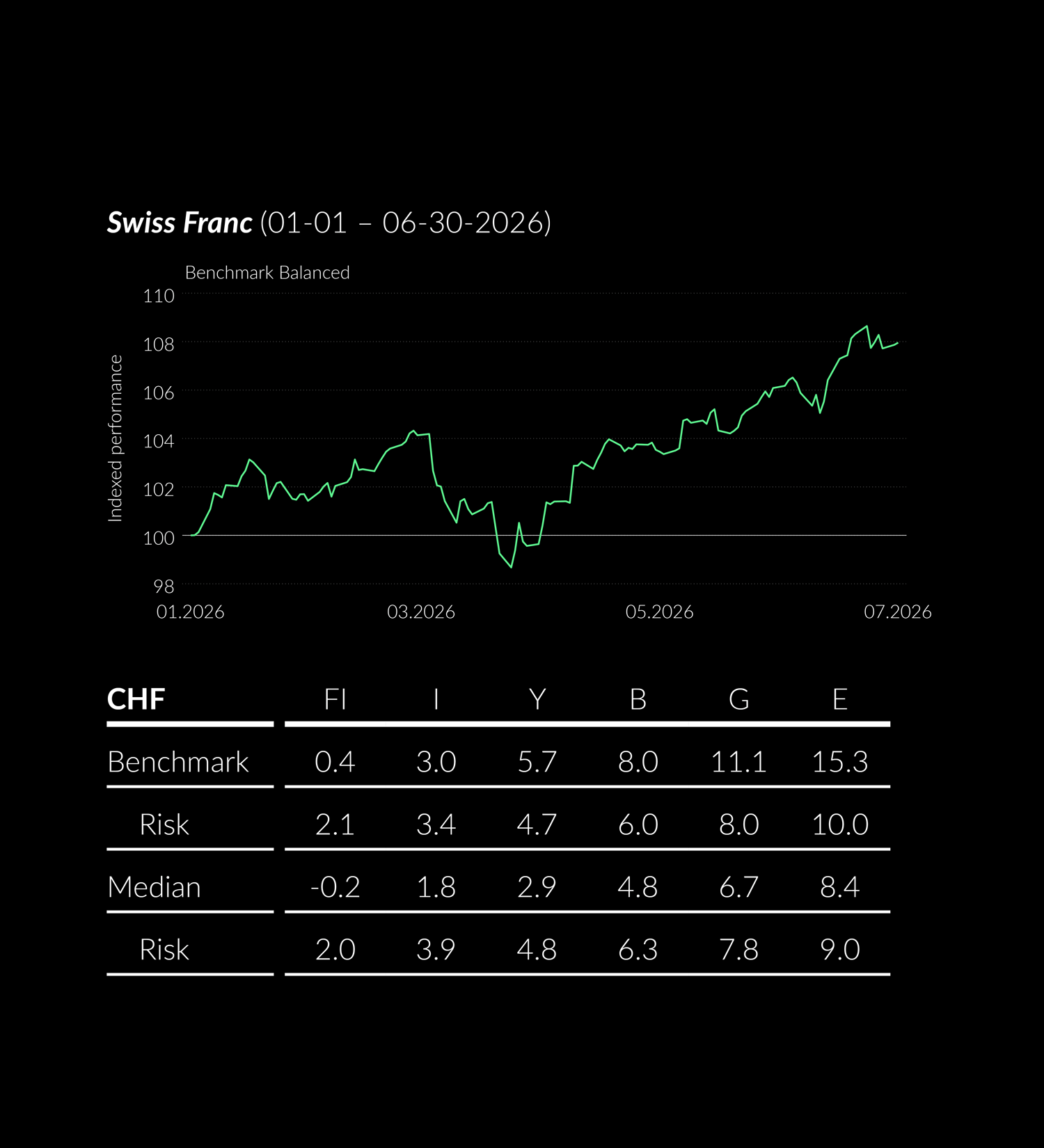
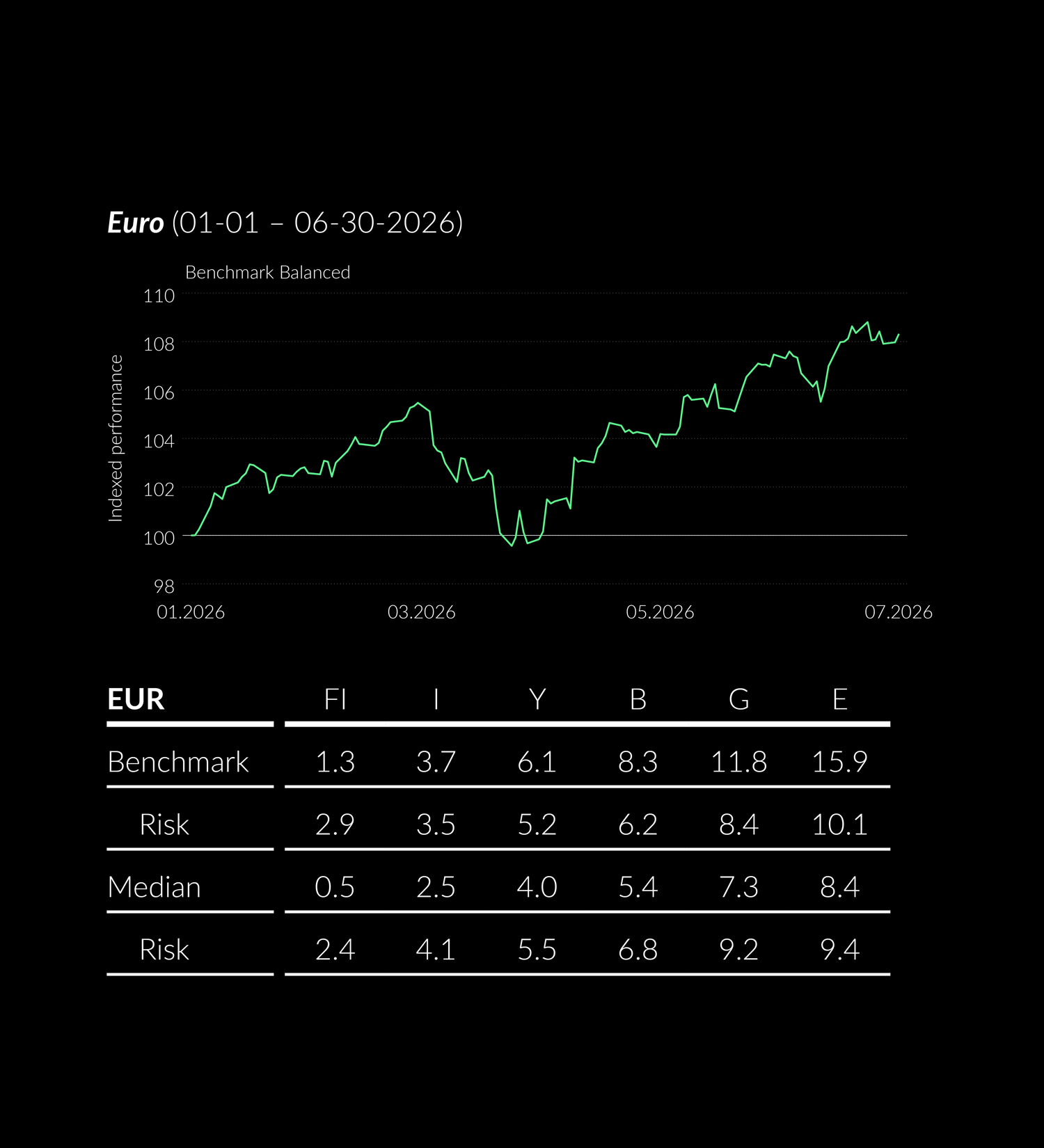
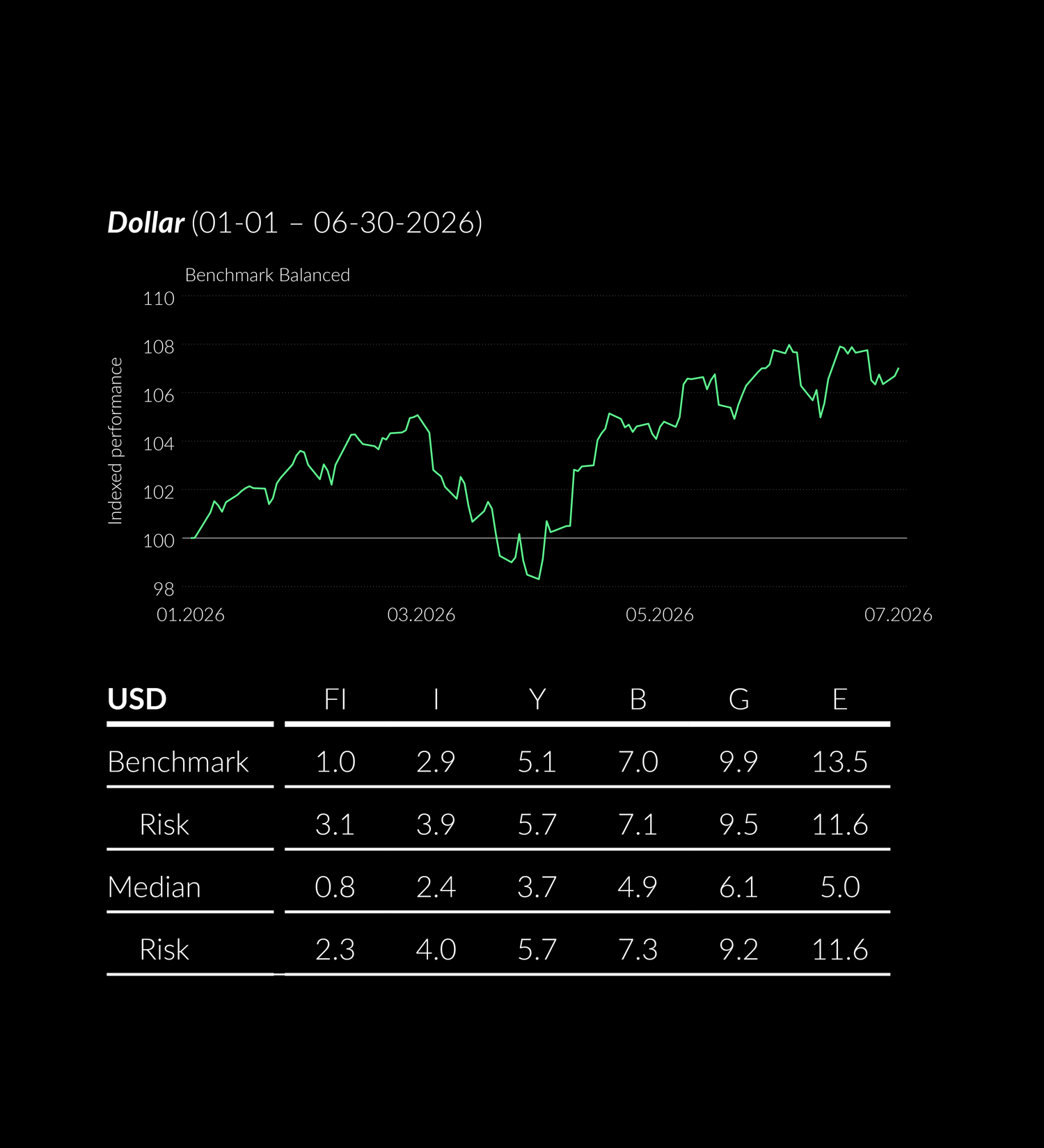
How it works: A Wealth Officer from Zwei Wealth will work with you to create an asset structure tailored to your goals and develop a suitable investment strategy. We call this «Plan.». Our advice is based on analyses carried out by our experts.
Here you will find our latest market assessments, which also form the basis for your own investment strategy.
Patrick Müller talks to Klaus W. Wellershoff about the general economic situation.
Similar to July, valuations in the financial markets moved largely sideways over the past month. This reflects the current economic stalemate. On the one hand, the global economy continues to prove remarkably resilient and remains largely unaffected by higher energy prices, growing political tensions and increasing geopolitical sabre-rattling. On the other hand, market valuations have already priced in much of the expected positive developments over recent months.
For your investment committee
The Wealth Office Investment Committee analyzes and discusses the most important events and developments on a quarterly basis (9 April 2026).
Chartbook and current market assessment
Strategic Considerations
What questions should be clarified before investment decisions are made? How are goals clearly defined, roles determined and decision-making processes structured? Zwei Wealth's strategic questions shed light on key fundamental issues relating to wealth management, governance and long-term orientation, providing guidance for well-founded decisions.
Economic growth: The Global Economy Remains Remarkably Resilient
The global economy continues to operate in a challenging environment. In addition to the ongoing conflict with Iran, extreme weather events such as heatwaves and wildfires have also had a dampening effect. Against this backdrop, it is hardly surprising that global economic growth slowed during the second quarter. The slowdown was particularly noticeable in the United States. Japan, the United Kingdom and China also recorded weaker growth in the second quarter than at the beginning of the year.
Nevertheless, the global economy remains remarkably resilient despite this moderation. In particular, companies around the world continue to maintain a positive outlook. Furthermore, European economies have continued their recovery. Most recently, growth accelerated noticeably in both the euro area and Switzerland. Key drivers included strong investment in artificial intelligence across the euro area and a robust pharmaceutical sector in Switzerland.
Inflation: Lower Core Rates Despite Higher Energy Prices
Given the uncertain situation surrounding the conflict with Iran and the associated volatility in energy prices, headline inflation rates remain subject to significant fluctuations worldwide and continue to be elevated overall.
Core inflation, which excludes volatile components such as energy and food, has nevertheless declined in many countries. This was particularly evident in the United States, where the core inflation rate fell from 2.9% to 2.5% within two months. This suggests that higher energy prices have so far had only a limited impact across the wider economy and that underlying inflationary pressure continues to ease. The slower pace of economic growth is also likely contributing to this trend. Against this backdrop, central banks are likely to continue delaying any further monetary tightening for the time being.
Monetary policy: Government Debt Is Becoming Increasingly Important
The situation facing global central banks remains challenging. Alongside the traditional trade-off between controlling inflation and supporting economic growth, rising levels of public debt are becoming an increasingly important consideration.
This is particularly evident in the United States, where government debt has now exceeded USD 40 trillion. As a result, long-term bond yields remain elevated and the room for manoeuvre available to the Federal Reserve is correspondingly limited. Interest rates cannot be cut because of inflation concerns, yet they also cannot be raised much further due to the high level of government debt. In addition, the Federal Reserve is currently unable to significantly reduce its balance sheet.
The Swiss National Bank (SNB) also finds itself in a difficult position. The Swiss economy has recently gained considerable momentum while inflation remains low. Yet even in this environment, the SNB is reluctant to reduce its balance sheet, presumably out of concern that selling foreign securities could once again strengthen the Swiss franc.